
A commons for seeds, soil, people and more
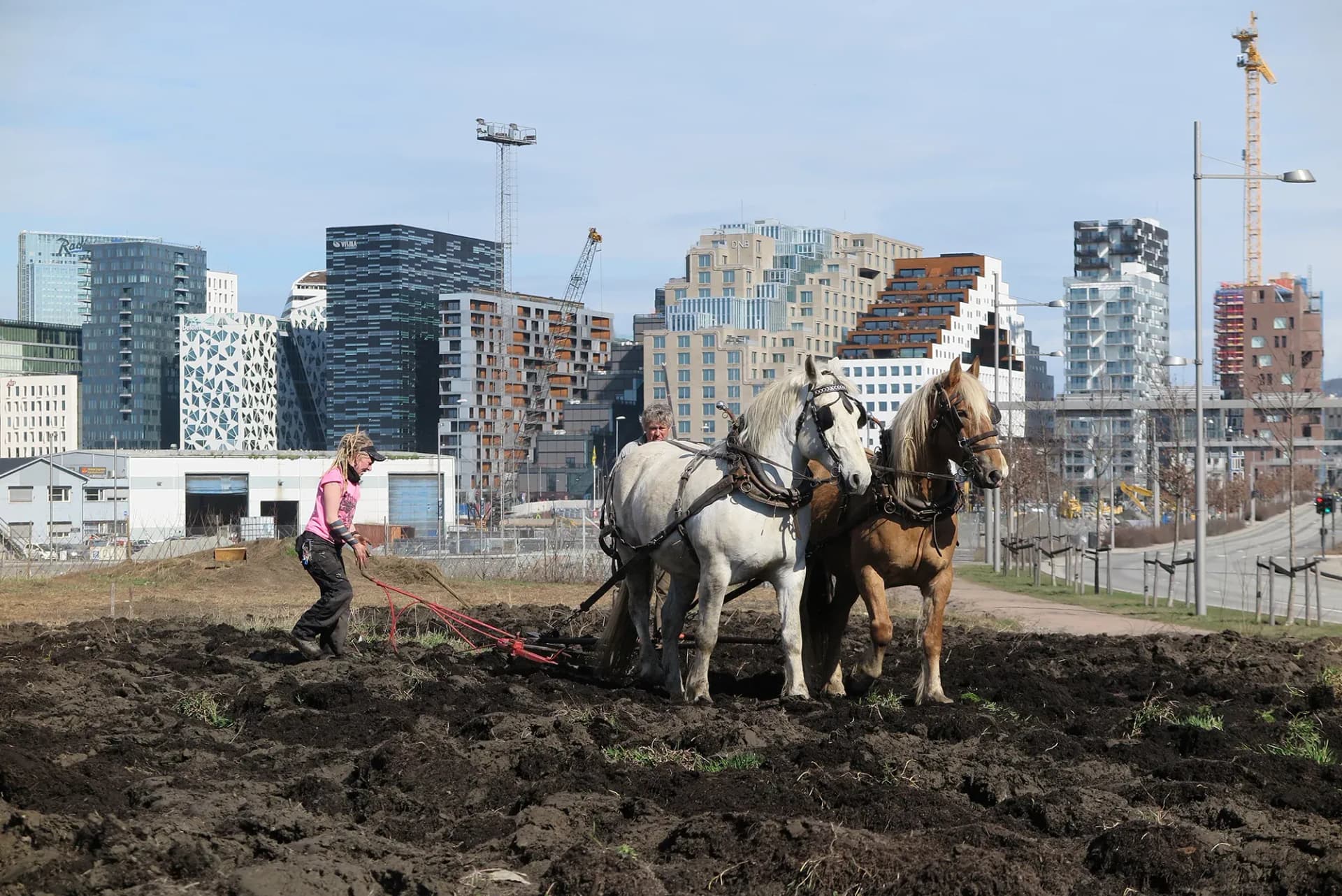
Losæter is an example of how bringing soil into our urban environments can transform a dead zone into a thriving, green social meeting place where urban dwellers can learn about ecological systems and sustainable agriculture practices. During the growing season you will find chickens, beehives, and cultivation of vegetables, fruit, herbs and flowers. The food that is produced here is eaten at events and open dinners throughout the harvest season.
You are welcome to visit Losæter anytime. Please do not pick the crops without permission from the farmers.
Background
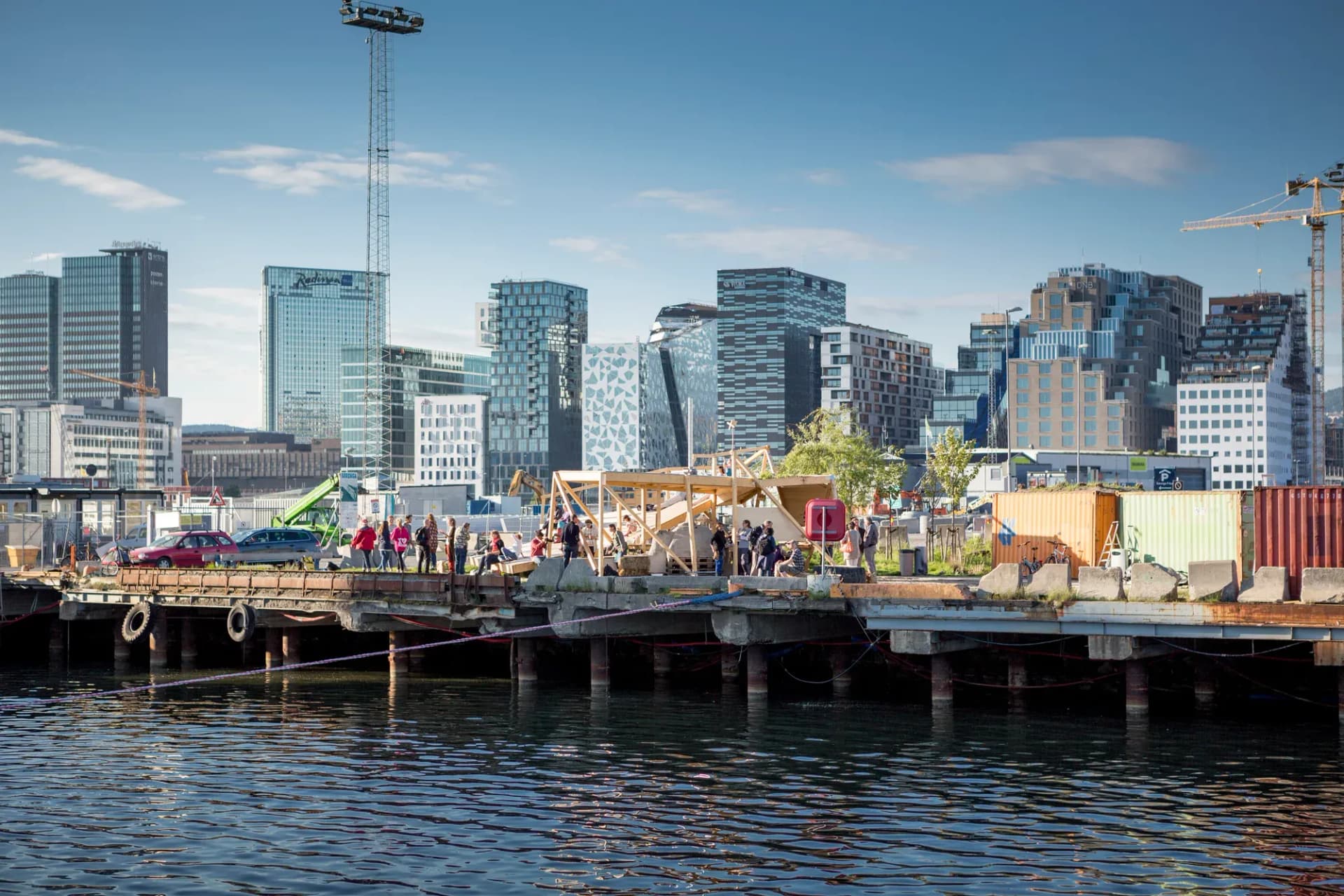
For many years the ground below you was a pile of rocks- an urban wasteland where you would never imagine anything could grow. Already in 2011 the artist group Futurefarmers started working towards the establishment of Losæter. On June 13th, 2015 they gathered farmers from over 50 Norwegian farms, as far north as Tromsø and as far south as Stokke, in Oslo with tractors, wagons, and wheelbarrows full of soil. Together with city dwellers, farm animals, shovels and musical instruments they went in a procession through the city streets to this site, which was declared on that day as “Losæter.” The farmers’ soil offerings were laid out to and a Land Declaration was signed. This ground building ceremony marked the transition of this piece of land into a permanent commons and stage for art and action related to food production. Since then many hands have worked in this soil, many seeds have been sown, many bellies have been filled with its crops, and many tons of organic matter have been composted.
Oslo
Oslo is a thriving agricultural city. There are farms to visit close to the city center such as Bogstad Gård in Sørkedalen or Bygdøy Kongsgård. There are allotments and school gardens, rooftop gardens, and even innovative indoor growing projects. There are beehives in parks and flower field for pollinating insects. Oslo is a sprouting, buzzing, and growing city.
Losæter has been inspired by

